Many drivers rely on warning lights to tell them when something is wrong. Oil level is one of those things that can drop without triggering an immediate alert. That is why checking it manually still matters.
It takes only a few minutes, but it gives you a clear picture of how your engine is doing. Done correctly, it can help you catch low oil or early signs of a problem before they turn into expensive repairs.
When To Check Your Oil For The Most Accurate Reading
Timing matters when checking oil. The best time is when the engine is cool or has been off for several minutes. This allows the oil to settle back into the oil pan.
Checking it right after shutting the engine off can give a slightly inaccurate reading because oil is still circulating through the system. Waiting a few minutes helps ensure you are seeing the true level.
Make sure the vehicle is parked on level ground. Even a slight incline can affect how the oil sits in the pan and change the reading.
Where To Find And How To Remove The Dipstick
The dipstick is usually located near the engine and marked with a colored handle, often yellow or orange. It is designed to be easy to identify and remove.
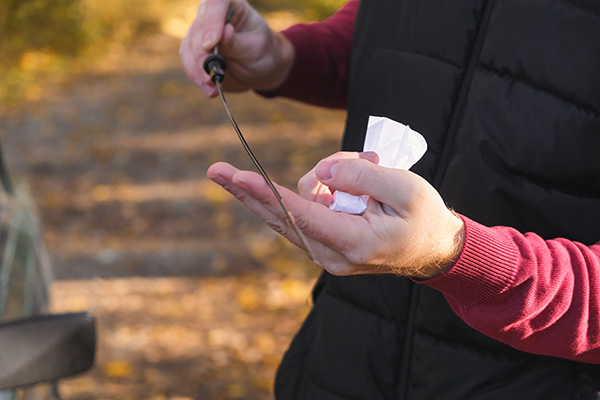
Pull the dipstick out slowly and have a clean rag or paper towel ready. The first time you pull it out, the reading may not be accurate because oil can splash or smear along the stick.
Wipe it clean before checking the level.
How To Read The Oil Level Correctly
After wiping the dipstick, insert it fully back into the tube. Then pull it out again and look at the end of the stick.
You will see two marks, lines, or a crosshatched area. These indicate the safe operating range for the oil level. The oil should fall somewhere between the minimum and maximum marks.
If the oil is near the lower mark, it is time to add oil. If it is below the minimum, the engine should not be run until oil is added.
What The Oil Condition Can Tell You
While checking the level, take a moment to look at the condition of the oil. Clean oil is typically amber or light brown. As it ages, it becomes darker.
That alone is normal, but very thick, gritty, or milky-looking oil can point to other issues. A burnt smell can also suggest the oil has been in service too long.
This quick visual check adds another layer to the inspection and helps you decide if an oil change is due.
How Often You Should Be Checking It
Oil level checks should be part of regular maintenance, especially for vehicles with higher mileage or those that use oil between services.
Checking once a month is a good habit for many drivers. It is also smart to check before longer trips or if you notice changes in engine performance.
Engines that are low on oil can develop internal wear much faster. Staying aware of the level helps prevent that.
Why Low Oil Should Never Be Ignored
Running an engine with low oil reduces lubrication between internal components. That leads to increased friction, heat, and wear.
The longer the engine operates under those conditions, the higher the risk of serious damage. A simple top-off can prevent a much larger repair if it is done early.
This is where a quick inspection makes a difference. It helps you catch the issue before it affects engine performance.
When To Have It Checked By A Shop
If your oil level keeps dropping between checks, it is worth having it looked at. That can point to leaks, internal consumption, or other issues that need attention.
If the oil condition looks unusual or the engine is making new noises, do not wait. These signs suggest the engine is not being lubricated as it should be.
Getting a professional inspection helps confirm what is happening and keeps you from guessing.
Get Oil Service In Encinitas, CA, With Complete Car Care Encinitas
If you are unsure about your oil level, notice changes in oil condition, or are due for service, Complete Car Care Encinitas in Encinitas, CA, can inspect your vehicle and make sure your engine has the protection it needs.
Bring your car in for service and keep your engine properly maintained before low oil leads to bigger problems.