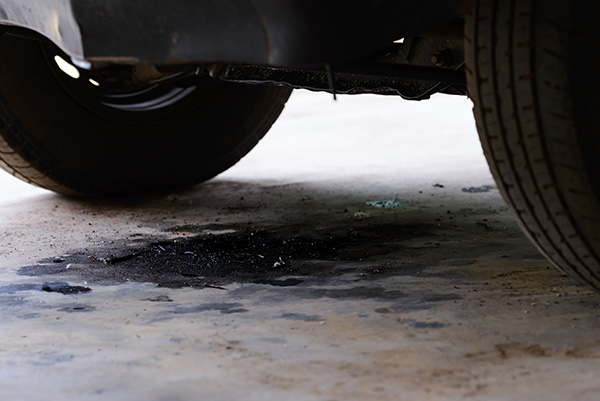
A fluid spot under your car is never something drivers are excited to find. The hard part is knowing what you are looking at. Some leaks are messy but less urgent, while others can affect braking, cooling, steering, or transmission operation faster than expected.
The color, smell, location, and feel of the fluid can give useful clues. Those clues are not a replacement for a proper check, but they can help you understand how serious the leak might be before you bring the vehicle in.
Start With Where The Leak Shows Up
The location of the puddle can narrow the search right away. A leak near the front center of the vehicle could be engine oil, coolant, power steering fluid, or A/C condensation. A leak near the wheels could point to brake fluid, axle seals, or suspension-related hydraulic components on some vehicles.
A leak under the middle or rear of the vehicle can point toward transmission fluid, differential fluid, fuel, or exhaust condensation. Location alone does not confirm the fluid type because air movement can push fluid backward while driving. Still, it gives a good starting point for an inspection.
Engine Oil Leaks Are Common And Easy To Smell
Engine oil is one of the most common fluids drivers find under a car. Fresh oil is amber or light brown, while older oil is darker brown or black. It feels slick between your fingers and can leave a greasy stain on concrete or cardboard.
Oil leaks can come from valve cover gaskets, oil pan gaskets, drain plugs, filter housings, timing covers, or seals. Some leaks only leave a few drops after parking. Others create a burning smell if oil reaches the hot exhaust parts. Even a small leak deserves attention, as low oil levels can increase engine wear.
Coolant Leaks Often Have Color And A Sweet Smell
Coolant can be green, orange, pink, blue, yellow, or purple, depending on the vehicle. It often has a sweet smell and feels thinner than oil. A coolant leak may appear near the front of the vehicle, especially around the radiator, hoses, water pump, thermostat housing, or reservoir.
Do not treat repeated coolant loss as normal. Coolant helps control engine temperature, and low coolant can lead to overheating. If the temperature gauge rises, steam appears, or the dashboard shows a coolant warning, stop driving as soon as it is safe to do so. A cooling system leak can get expensive quickly if the engine is pushed too hot.
Brake Fluid Leaks Need Fast Attention
Brake fluid is usually clear to light amber when new and darker as it ages. It feels slick but thinner than engine oil. A brake fluid leak may appear near the wheels, under the master cylinder, along the brake lines, or near the brake hoses.
This is one of the more urgent leaks because it affects hydraulic brake pressure. A soft pedal, low brake fluid warning, longer stopping distance, or fluid near a wheel should be taken seriously. Do not keep driving if the pedal feels wrong or the brake warning light is on. The vehicle needs to be checked before braking performance becomes unsafe.
Transmission Fluid Can Look Red, Brown, Or Dark
Transmission fluid is often red or reddish-brown, though some fluids may be different colors depending on the vehicle. It has a slick feel and can smell slightly sweet when healthy. Burnt transmission fluid has a sharper, darker smell and may look brown or nearly black.
Leaks can come from transmission pans, cooler lines, axle seals, output shaft seals, or case connections. If the fluid level drops too far, the transmission may slip, hesitate, shift harshly, or overheat. Transmission problems can escalate quickly once low fluid and heat work together.
A Few Quick Clues Can Help
If you are trying to identify a leak at home, use a clean piece of cardboard under the vehicle overnight. That makes color and location easier to see without crawling under the car.
Never taste or touch an unknown fluid with your bare hands if you can avoid it. Some fluids are toxic, irritating, or damaging to paint and surfaces.
Why Fluid Leaks Should Not Be Ignored
A small leak can seem harmless when the vehicle still drives fine. The problem is that fluid levels are there for a reason. Oil protects the engine, coolant controls heat, brake fluid transfers stopping pressure, and transmission fluid helps the vehicle shift and move correctly.
Regular maintenance helps catch seepage, worn hoses, loose clamps, aging gaskets, and fluid condition problems before they turn into bigger repairs. If you are adding any fluid repeatedly, the vehicle is not simply using it up. Something is leaking, burning, or failing to hold pressure.
Get Fluid Leak Repair In Encinitas, CA, With Complete Car Care Encinitas
If you find a puddle under your car or keep topping off oil, coolant, brake fluid, or transmission fluid, Complete Car Care Encinitas in Encinitas, CA, can identify the leak and recommend the right repair.
Bring it in before a small fluid leak lowers the level enough to damage the system it was meant to protect.