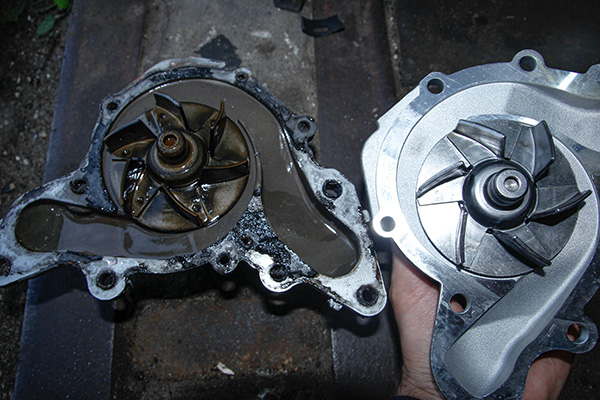
Many modern BMW engines use an electric water pump instead of a traditional belt-driven pump. That design gives the engine computer much more control over coolant flow, helping the engine warm up efficiently and manage temperature under different driving conditions.
The downside is that the pump contains both mechanical and electronic components. When it starts failing, the symptoms are not always as simple as a visible coolant leak. A BMW can develop temperature warnings, reduced power, hard-running cooling fans, or intermittent overheating before the pump stops working completely.
BMW Electric Water Pumps Work Differently From Traditional Pumps
The engine usually drives a conventional water pump through a belt or timing system. As engine speed increases, pump speed increases with it. BMW's electric design works independently, allowing the computer to change coolant flow based on engine temperature and operating conditions.
That flexibility is useful, but it also means the pump depends on an electric motor, internal electronics, wiring, and commands from the engine management system. At our shop, we look at coolant temperature data and pump operation together because a pump can fail electrically even without bearing noise or an obvious leak.
Heat and Electrical Stress Take a Toll Over Time
An electric water pump lives in a harsh environment. It is exposed to high coolant temperatures, repeated heating and cooling cycles, vibration, and a significant electrical load every time the engine runs.
Over time, the internal motor or control electronics can weaken. The pump may work normally during one drive and fail to reach the required speed during the next. That intermittent behavior is one reason BMW water pump problems can be confusing at first. The vehicle may cool normally around town and then show a temperature warning during a longer or harder drive.
A Cooling Fan Running at High Speed Can Be an Early Clue
One symptom BMW owners sometimes notice before an overheating warning is a cooling fan that suddenly becomes very loud. The fan can run at high speed because the engine computer sees coolant temperature rising or detects a cooling-system problem.
A loud fan does not prove the water pump is bad, but it gets our attention when it appears with rising temperature, weak cabin heat, or stored cooling-system faults. We check whether the pump is responding to commands and whether coolant is actually circulating before replacing parts.
Temperature Warnings Should Be Taken Seriously
Some BMW models do not use a traditional temperature gauge that gives the driver much warning in advance. Instead, the vehicle can display a yellow or red temperature warning once the cooling system is already struggling.
Common signs include:
- A high engine temperature warning
- Reduced engine power
- Cooling fan running unusually hard
- Heater output suddenly turning cold
- Temperature rising during traffic or hard driving
- Cooling-system fault codes
- Intermittent overheating that disappears after a restart
If a red temperature warning appears, continuing to drive can turn a water pump repair into cylinder head or head gasket damage. Shut the engine down safely and have the vehicle checked.
The Thermostat Can Fail Alongside the Pump
On many BMW cooling systems, the thermostat and electric water pump work closely together. A thermostat that does not open correctly can create overheating symptoms that look very similar to a weak pump.
That is why we diagnose both components rather than assuming one based on mileage alone. Scan data can show coolant temperature behavior, while bidirectional testing on applicable models can help us evaluate pump response. We also inspect coolant level, leaks, hoses, and system pressure because several cooling problems can overlap.
Low Coolant Can Make a Pump Problem Worse
Electric water pumps need a properly filled cooling system to move coolant effectively. If the system is low because of a leaking hose, expansion tank, radiator, thermostat housing, or another component, circulation can become inconsistent.
Air pockets can also interfere with heater operation and temperature control. BMW cooling systems often require a specific filling and bleeding procedure after service. We make sure the system is filled correctly because installing a good pump into a system full of trapped air can leave the vehicle with the same overheating complaint.
Do Not Wait for Complete Pump Failure
An electric water pump can lose output before it stops altogether. The engine may overheat only under certain conditions, such as extended idling, freeway driving, climbing grades, or hot weather.
Regular maintenance helps us catch coolant leaks and other cooling-system weaknesses, but the pump itself is usually diagnosed by symptoms, stored faults, and actual operating data. If temperature behavior becomes inconsistent, waiting for the pump to fail completely is risky. BMW engines do not tolerate severe overheating well, and the cost of secondary engine damage can far exceed the cost of correcting the cooling-system problem early.
Get BMW Water Pump Service In Encinitas, CA, With Complete Car Care Encinitas
If your BMW is showing temperature warnings, running its cooling fan at full speed, losing cabin heat, or overheating intermittently, Complete Car Care Encinitas in Encinitas, CA, can inspect the electric water pump, thermostat, coolant level, and related cooling-system components.
Schedule a cooling-system diagnostic before an intermittent water pump problem becomes a full overheating event.