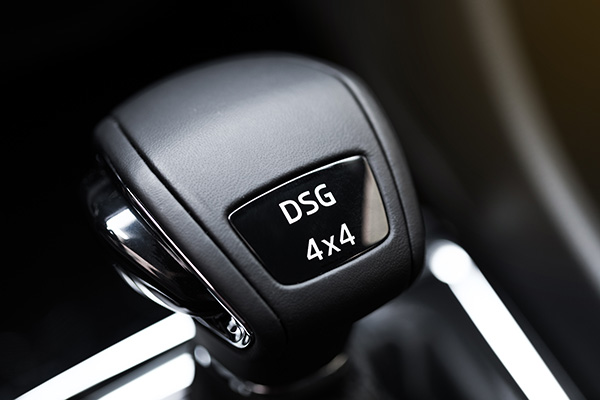
Audi and Volkswagen DSG transmissions use two internal clutches and electronically controlled hydraulic components to deliver rapid gear changes. Depending on the model, the transmission may use wet clutches lubricated by fluid or a dry-clutch design with different service requirements.
DSG fluid and filter service must follow the schedule written for the exact transmission. Delaying required maintenance allows heat, clutch material, and fine metal particles to remain in the fluid longer, which can affect lubrication, hydraulic control, clutch operation, and mechatronic components.
How A DSG Transmission Works
DSG stands for Direct-Shift Gearbox. Instead of using a conventional torque converter, the transmission uses two clutches. One clutch controls one group of gears, while the second controls the other group. The transmission can prepare the next gear before releasing the current gear, allowing fast shifts with little interruption in power.
A mechatronic unit combines electronic controls, hydraulic valves, pressure regulation, and shift actuators. It receives information about throttle position, engine speed, road speed, temperature, brake input, and driver demand. It then controls clutch pressure and gear selection.
Because the system relies on precise hydraulic operation, the correct fluid level and specification are essential. Degraded or contaminated fluid can interfere with the pressure control required for consistent clutch engagement.
What DSG Service Usually Includes
Required procedures vary between transmission families, but a wet-clutch DSG service commonly includes draining the old fluid, replacing the transmission filter when the design uses a serviceable filter, installing new seals, and refilling with approved DSG fluid.
The fluid level is then checked using a temperature-based procedure. Many DSG units do not use a traditional dipstick. The vehicle must be level, the transmission fluid must be within a defined temperature range, and the engine may need to be running while the final level is set.
A complete service may include:
- Draining the transmission fluid
- Replacing the DSG filter
- Replacing filter housing seals
- Inspecting drained fluid for debris
- Refilling with the exact approved fluid
- Monitoring fluid temperature
- Setting the final fluid level
- Checking for leaks
- Resetting maintenance information when applicable
- Road testing transmission operation
Using the wrong fluid or setting the level incorrectly can cause poor shifting, clutch trouble, overheating, and internal wear.
Why DSG Fluid Breaks Down
DSG fluid lubricates bearings and gears while supporting hydraulic pressure and clutch operation in wet-clutch units. It is exposed to repeated heat cycles, pressure changes, and normal internal wear.
Over time, additives lose effectiveness, and the fluid collects fine particles from clutch and gear operation. The filter captures part of this material, but it can become restricted as contamination accumulates.
Old fluid may no longer control heat and friction as effectively as fresh fluid that meets the required specification. The change is gradual, which is why a vehicle may still seem to shift normally even when service is overdue.
Shifting Can Become Harsh Or Inconsistent
An overdue DSG may begin producing firmer shifts, hesitation, shuddering, or inconsistent clutch engagement. The driver may notice a jolt when pulling away, rough low-speed movement, or hesitation when selecting Drive or Reverse.
These symptoms do not automatically mean the transmission needs replacement. They can result from incorrect fluid level, worn clutches, mechatronic faults, software adaptations, engine performance problems, damaged mounts, or electrical concerns.
Diagnostic testing should compare commanded clutch operation, pressure control, gear selection, temperature, and actual transmission behavior. Fluid service may help when degraded fluid is contributing to the concern, but it cannot restore worn friction material or repair a failed control unit.
Heat Can Increase Internal Wear
DSG transmissions generate heat during clutch engagement, low-speed crawling, hill starts, heavy traffic, and repeated acceleration. Wet-clutch units rely on fluid to carry some of that heat away from internal components.
Degraded or low fluid can reduce cooling and lubrication. Excessive temperature may accelerate clutch wear, harden seals, affect valve operation, and place additional stress on electronic components inside the mechatronic unit.
Drivers should avoid holding the vehicle on a hill with the accelerator. Use the brake or parking brake instead. Allowing the clutches to slip continuously creates unnecessary heat, especially in slow traffic or on steep grades.
The Filter Can Become Restricted
A serviceable DSG filter removes particles from the fluid before they circulate through hydraulic passages and sensitive control components. As the filter loads with debris, fluid flow may become restricted.
Reduced flow can affect pressure supply and increase the work required from the transmission pump. A severely contaminated filter may contribute to delayed engagement, pressure-related faults, or overheating.
The condition of the filter and drained fluid can also provide useful information. Heavy metal debris, large particles, or a strong burned odor may indicate wear that requires further evaluation rather than maintenance alone.
Can Late Service Damage The Mechatronic Unit?
The mechatronic unit depends on clean fluid, stable pressure, correct voltage, and accurate sensor information. Contamination can affect small hydraulic passages and control valves, while heat can damage seals and electronic parts.
An overdue service does not prove the mechatronic unit has been damaged. However, extended operation with degraded fluid can increase the conditions that contribute to valve sticking, pressure faults, and clutch-control problems.
Warning signs that require prompt testing include:
- Transmission warning messages
- Loss of certain gears
- Harsh engagement
- Delayed movement
- Repeated shuddering
- Transmission entering a restricted mode
- Fluid leaks
- Burning odor
- Unusual mechanical noise
Continuing to drive with these symptoms can increase clutch and gear damage.
Should An Overdue DSG Still Be Serviced?
In most cases, overdue maintenance should be addressed rather than ignored. The shop should first confirm the exact transmission, service history, fluid condition, current symptoms, and stored fault information.
A proper DSG service uses the correct fluid, filter, seals, filling equipment, temperature procedure, and final level check. It should not be treated as a generic transmission flush. Some DSG units require different procedures, and certain dry-clutch designs do not follow the same service plan as wet-clutch transmissions.
Regular maintenance provides the strongest protection when completed on time, but an overdue vehicle still benefits from an informed evaluation. The repair plan should be based on the transmission's condition, not the fear that replacing old fluid will automatically cause failure.
Get Audi And Volkswagen DSG Service In Encinitas, CA, With Complete Car Care Encinitas
Complete Car Care Encinitas in Encinitas, CA, can identify your Audi or Volkswagen DSG transmission, review its service history, inspect fluid condition, and test shifting concerns.
Contact us to schedule DSG service with the correct fluid, filter, temperature procedure, and equipment for your vehicle.